If you've ever tried growing parsley from seed, you know the exact moment doubt creeps in. You wait a week, maybe two, and the seed tray still looks like plain dirt. You're not doing anything wrong.
Parsley is just stubborn.
In our research, the average time to germination for parsley seed sits between 14 and 28 days, far slower than basil or cilantro. That's because the seed coat is hard, and the embryo inside stays dormant until conditions are just right. Understanding this biological brake is the first step to actually getting green.
Let's look at why this happens and how to work with it.
Why Parsley Seeds Take So Long to Sprout (The 3-Week Reality Check)
Parsley, known botanically as Petroselinum crispum, has a secret identity. That tiny brown speck in your palm isn't just a seed. It's a hard-coated shell protecting a dormant embryo.
Water takes days to penetrate that coat, which is why your seed tray stays bare longer than any other herb you start.
The mechanism is called physical dormancy. In nature, this prevents seeds from germinating after a light rain, only to die in a drought. You don't need to file, sand, or nick the seed, but you do need to help it soak.
Per the University of Minnesota Extension, a 12 to 24 hour soak in warm water helps break this dormancy. It can cut germination time by nearly a week. Combine that with consistent moisture and soil temperatures between 65°F and 75°F, and you'll see sprouts in 14 to 21 days, not 30 or 40.
As of 2026, most commercial parsley seed sold to home gardeners has a germination rate around 70% to 80%. That means if you sow six seeds, expect five to make it. Here's something visual to hold onto.
The seed coat is naturally dark brown with faint ridges, and it swells visibly as it absorbs moisture. Use that as your cue that the soak is working.
Gear Guide: Seed Trays, Soil, Heat Mats, and the Light Setup That Works
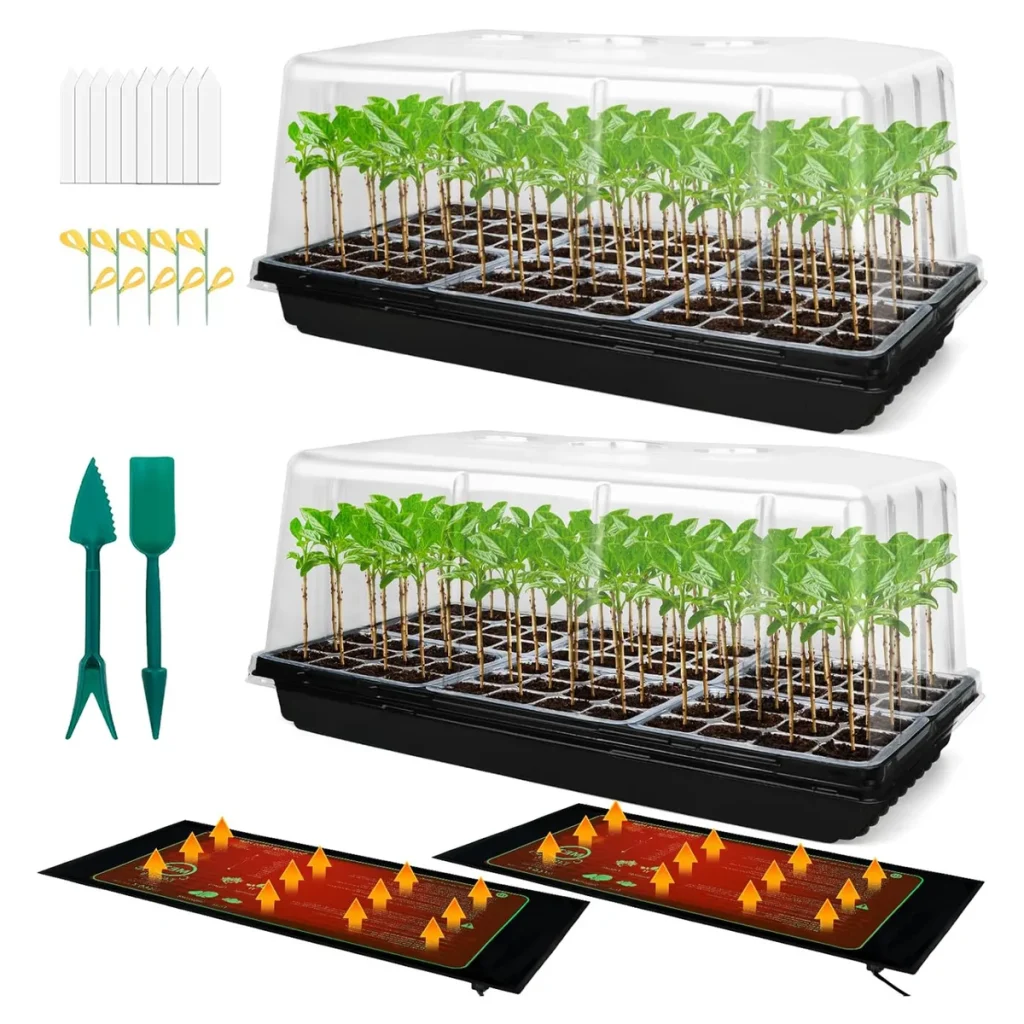
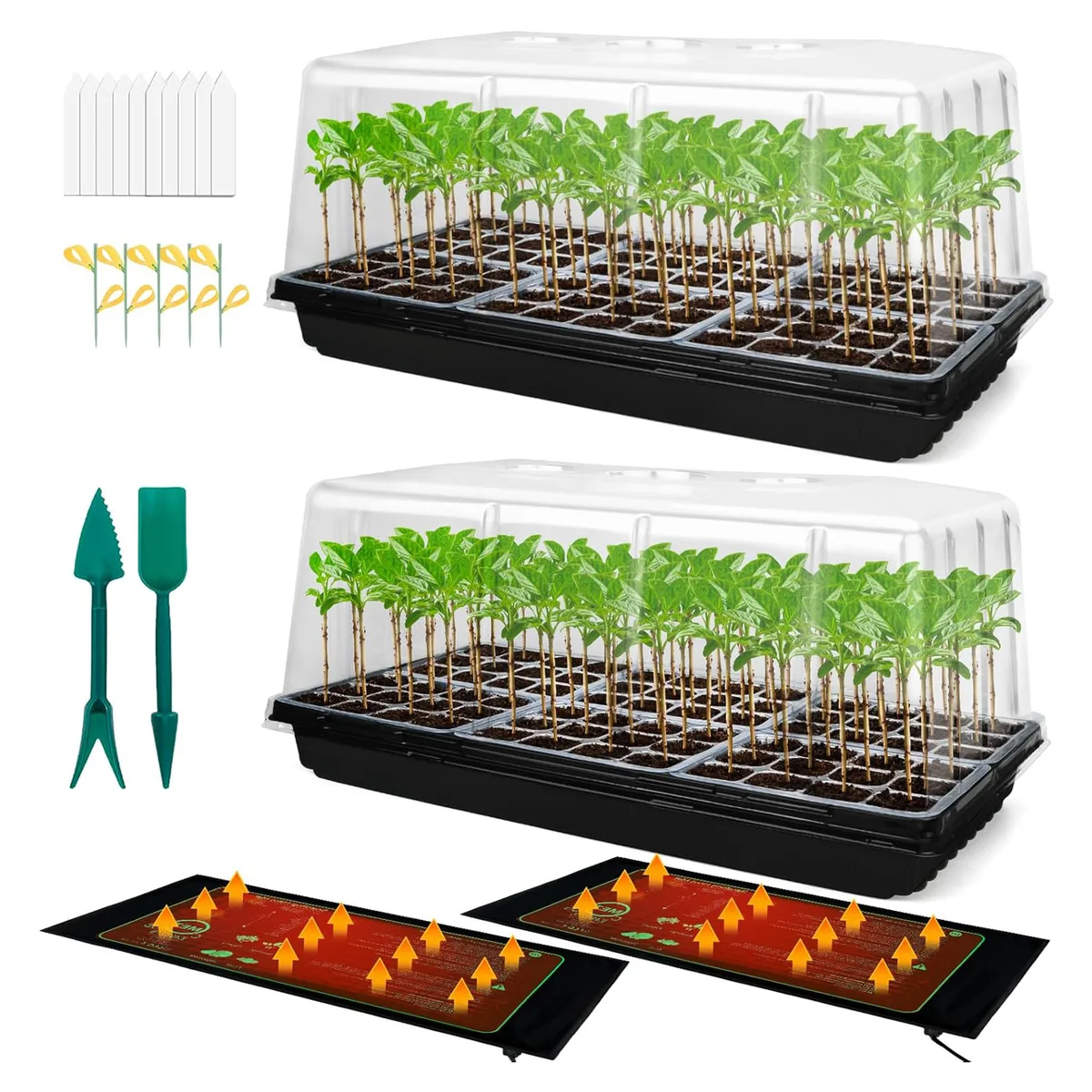
You don't need a greenhouse to start parsley, but the right gear makes the wait far less painful. We recommend starting with a standard 10×20 seed tray with 72 cell inserts. That size fits neatly under a single grow light.
Use a fine-textured, sterile seed-starting mix. Do not use garden soil. Garden soil compacts in cells and carries fungal spores that cause damping-off.
A sterile mix drains freely while holding just enough water for consistent germination.
A seedling heat mat is the single best investment for slow sprouters like parsley. Set it to 70°F (21°C) and place the tray on top. That gentle bottom heat pushes seeds over the germination threshold.
For light, a full-spectrum LED panel works best for indoor gardeners. Position it 2 to 3 inches above the tray and run it for 14 to 16 hours a day. You can also use a simple shop light with T5 fluorescent bulbs.
The key is keeping the light close and running it long. A spray bottle for misting and a clear humidity dome complete the setup.
Sowing Parsley Seeds: Step-by-Step with Visual Cues (Depth, Spacing, Moisture)
Here's the process that gives you the best shot at thick, healthy parsley. Follow these steps in order.
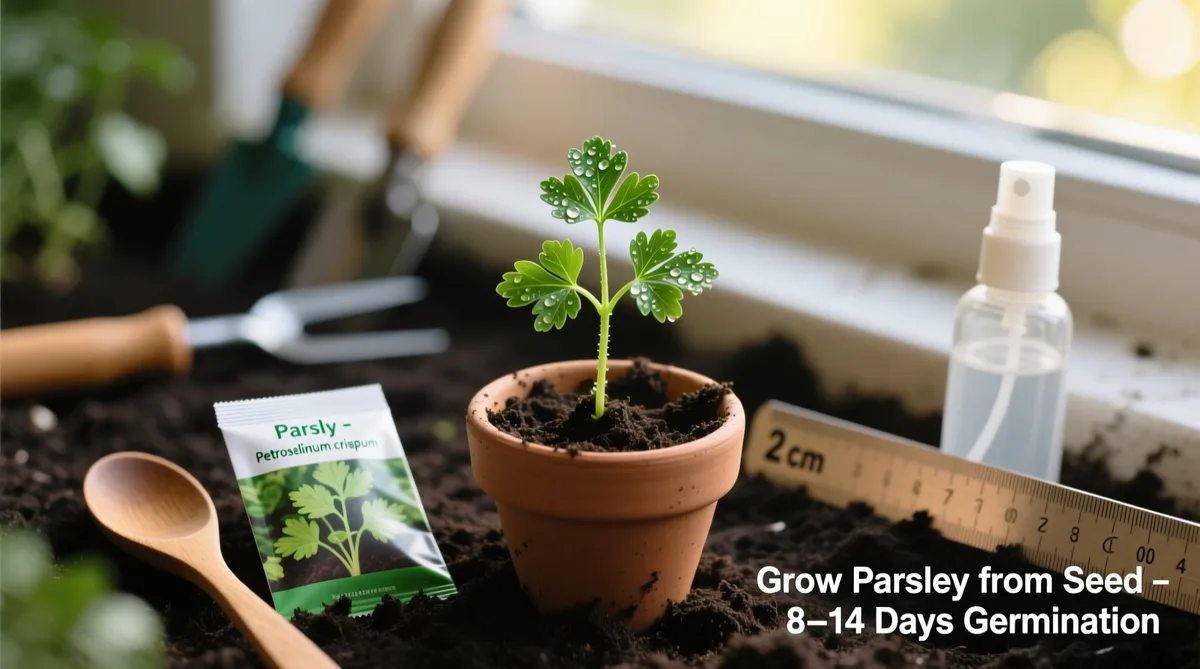
First, soak the seeds in warm water for 12 to 24 hours. This softens the hard seed coat and gets the embryo hydrated. While they soak, fill your tray with the pre-moistened seed-starting mix.
Sow two seeds per cell, placing them 1/4-inch deep. A good visual cue is a pinky-nail depth. Press the soil down lightly so the seed makes firm contact with the mix, but don't pack it down.
Mist the surface until the mix darkens. Do not pour water into the cells, that washes seeds too deep. Cover the tray with the humidity dome to lock in moisture.
Then place the whole thing on the heat mat.
Check the tray daily. Condensation on the dome is good, it means the environment is humid. If the top of the mix looks pale and dry, mist it again.
At this stage, consistency beats everything else.
You'll notice the water turns slightly brown after soaking. That's just tannins leaching out, completely normal. What matters is the seeds sinking slightly, a sign they've absorbed water.
Germination Timeline: What You Should See at Day 7, 14, 21, and 28
Parsley takes the scenic route compared to basil or cilantro. But that slow start has a payoff. The roots develop a robust network before the leaves shoot up, which means a sturdier plant in the garden.
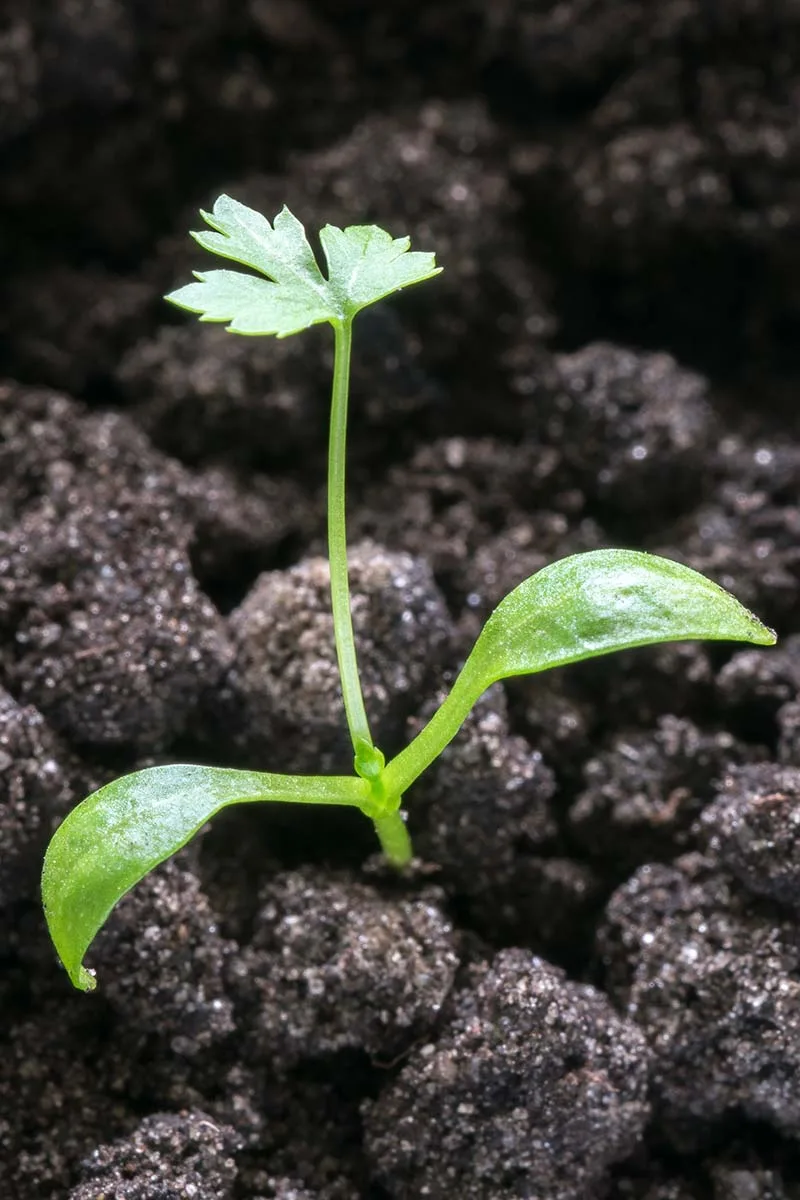
Day 7: Nothing. The seeds are absorbing water and noticing the heat. Resist the urge to dig around and check them.
Digging snaps the fragile new roots before they even form.
Day 14: This is often the first visible sign of life. A tiny white root, or radicle, emerges from the seed coat. You might see little white threads if you look closely at the soil surface.
Day 21: Green loops, or hypocotyls, push through the soil. They look like thin white-and-green hairs at first. A few days later, the seed coat drops off and the first true leaves form.
Day 28: Seedlings stand upright with two distinct, slightly lobed leaves. This is the ideal time to start your 14-hour light schedule at full intensity.
| Timeframe | Visual Cue | Action |
|---|---|---|
| Day 1-7 | Bare soil, no change | Keep moisture, avoid digging |
| Day 8-14 | White roots (radicle) emerge | Keep dome, monitor mold |
| Day 15-21 | Green loops (hypocotyls) appear | Remove dome, introduce light |
| Day 22-28 | First true leaves expand | Thin to one plant per cell |
Seedling Problems: Leggy Growth, Damping-Off, Discoloration Fixes
Even with perfect care, parsley can throw a tantrum. Here's how to read the signs and fix them before they spread.
Leggy growth means the stem stretches tall and pale, reaching for light. Fix it by moving the light closer, about 2 to 3 inches above the leaves. If the stem gets too tall and flops over, you can repot it slightly deeper when you transplant.
Damping-off shows up as white fuzz on the soil and a mushy stem at the base. It's a fungal disease and it's lethal. Water from the bottom, remove the humidity dome for a few hours each day, and pluck out any collapsed seedlings immediately.
Discoloration often appears as pale patches or chlorosis on the leaves. This usually signals a nutrient deficiency, but don't fertilize seedlings this young. Fresh seed-starting mix has enough nutrition for the first few weeks.
Yellow leaves usually mean overwatering. Let the top half-inch of soil dry out between waterings. Purple stems mean the soil is too cold.
Add a heat mat or bump the thermostat. A good test for watering is lifting the tray. If it feels light as a feather, it's dry.
If it feels like a damp sponge, it's perfect.
Keep your air moving. A small fan pointed away from the tray works wonders for strengthening stems and preventing fungal growth. If a problem looks like a moldy carpet and smells earthy, act fast, because it spreads quickly through a tray.
Thinning, Potting Up, and Hardening Off: Root-Safe Handling from Tray to Garden
Once your parsley seedlings have two sets of true leaves, it is time to make some decisions. The first is thinning. If you sowed two seeds per cell, you now have two seedlings competing for one space.
Snip the weaker one at soil level with small scissors. Do not pull it out. Pulling disturbs the roots of the seedling you want to keep.
Let the remaining seedling grow in its cell for another two to three weeks. At that point, you will see roots poking through the drainage holes. That is the signal to pot up to a 3-inch or 4-inch container.
Use the same sterile seed-starting mix for the first potting up. Water the new pot thoroughly and let the seedling settle for a week before you start hardening off.
Hardening off is a slow introduction to outdoor conditions. Bring the tray outside for one hour on the first day. Add one hour each day over a full week.
Start in full shade and gradually move the plants into partial sun.
Night temperatures must stay above 50°F (10°C) before you leave seedlings out overnight. If a late frost threatens, bring them back inside.
Transplant into the garden when the plant has four to six true leaves. Space each plant 8 to 10 inches apart. Parsley has a taproot that dislikes being moved, so handle the root ball gently.
A well-hardened plant barely notices the move. A rushed one sulks for a week.
Parsley Seeds vs. Nursery Transplants: Cost, Time, and Variety Compared
You can skip the whole seed-starting process and buy nursery transplants in spring. Many gardeners do. But the trade-offs are worth understanding before you decide.
Cost is the clearest difference. A seed packet costs three to five dollars and contains 200 to 300 seeds. A single nursery transplant costs the same amount.
One seed packet can produce dozens of plants.
Time is where transplants win. A nursery plant is already 6 to 10 weeks old when you buy it. You can harvest leaves two to three weeks after planting.
Seed-started parsley takes 10 to 12 weeks to reach that same stage.
Variety is the hidden factor. Nurseries typically sell one type of flat-leaf parsley. Seed catalogs offer curly varieties, Italian flat-leaf, and specialty strains like Giant of Italy or Forest Green.
| Factor | Seeds | Transplants |
|---|---|---|
| Cost per plant | 1 to 3 cents | 3 to 5 dollars |
| Time to harvest | 10 to 12 weeks | 2 to 3 weeks |
| Variety choice | 15 to 20 types | 1 to 2 types |
| Root health | Taproot undisturbed | Potbound risk |
If you want a big harvest for freezing or drying, seeds are the better value. If you need a quick kitchen supply and only want one or two plants, transplants save you the wait.
One warning about nursery transplants. Check the root ball before you buy. Roots circling the bottom mean the plant is potbound.
That can stunt growth for weeks after transplanting.
Frequently Asked Questions About Growing Parsley from Seed
Should I freeze parsley seeds before planting?
No. Parsley seeds do not need cold stratification. Freezing them can damage the embryo.
A warm water soak is the only pretreatment recommended by extension services.
Can I grow parsley from seed indoors year-round?
Yes. Parsley grows well under lights in any season. Give it 14 to 16 hours of light and temperatures around 65°F to 70°F.
It will produce leaves steadily for six to eight months before it starts to decline.
Why is my parsley seed not germinating after four weeks?
The most common causes are cold soil, dry soil, or old seed. Check soil temperature with a probe. It should read 65°F to 75°F.
If the mix dried out even once, the seeds may have stopped developing. Start fresh with soaked seeds on a heat mat.
How deep should I plant parsley seeds?
One quarter inch deep. That is about the depth of your pinky fingernail. Seeds planted deeper struggle to reach the surface.
Seeds left on top dry out in hours.
Can I direct sow parsley seeds outdoors?
Yes, but timing matters. Wait until soil temperature reaches at least 55°F. Direct-sown parsley often germinates slower than indoor starts.
In cool springs, the wait can stretch to five or six weeks.
How many parsley seeds do I need per pot?
Sow two seeds per 4-inch pot. Thin to one strong seedling after both have true leaves. That single plant will fill the pot with lush growth over several months.