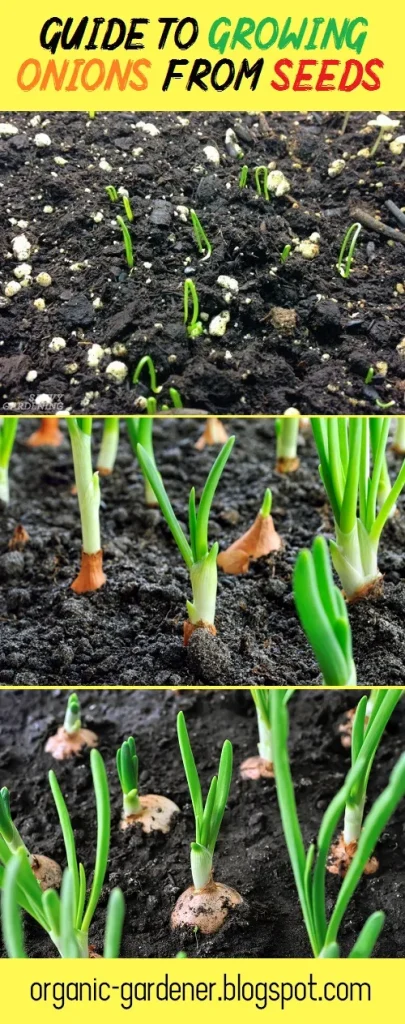
If you've tried growing onions and ended up with bulbs the size of golf balls, you're not alone. Most people follow generic advice that treats every garden the same. That's why so many yield disappointing results.
The real difference comes down to day-length sensitivity. Onion plants form bulbs based on how many hours of sunlight they get each day. Plant the wrong type for your region and you'll get tops but no bulbs.
Per extension service data, matching day-length variety to your latitude is the single biggest factor separating a full harvest from a total loss. Let's walk through what actually matters.
Quick Answer
Plant the right day-length variety for your latitude. Short-day onions work in the South. Long-day onions work in the North.
Space sets 4 to 6 inches apart in loose, well-drained soil. Water consistently and stop when tops fall over. Cure in a warm, dry spot for two to three weeks before storage.
The #1 Decision That Makes or Breaks Your Onion Harvest
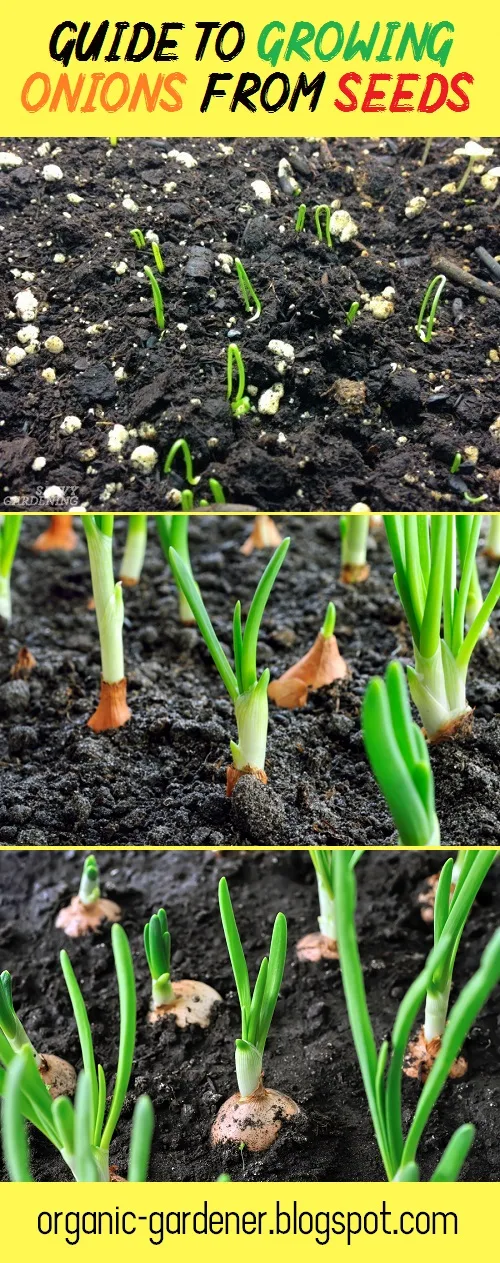
Image source: Web (Bing) / organic-gardener.blogspot.com (Web image (fair-use with source credit))
Here is the truth most garden guides skip. Onions are photoperiod-sensitive plants. They do not bulb based on how old they are or how warm the soil gets.
They bulb when daylight crosses a specific threshold for their variety.
If you live in Georgia and plant a long-day onion variety bred for Maine, your plants will grow tall green tops. Then they will stop. They will never form a decent bulb because your summer days never get long enough to trigger bulbing.
The same problem happens in reverse for northern growers planting short-day varieties. Their bulbs start forming too early in small plants and produce tiny, underdeveloped onions.
This is the single most common failure point in home onion growing. Most gardeners buy whatever sets the local hardware store stocks and hope for the best. That approach works only if the store happens to carry the right type for your exact location.
The fix is simple. Know your day-length zone before you buy anything. We cover exactly how to figure that out in just a moment.
Sets, Seeds, or Transplants? Which Starter Makes Sense for You
You have three ways to start onions. Each one trades speed for cost and variety selection.
Onion sets are tiny dormant bulbs sold in mesh bags. They are the fastest option. You plant them, they grow, you harvest.
No indoor setup needed. The tradeoff is limited variety. Most stores carry only a few common types, and they might not match your region.
Sets also have a higher risk of bolting if they were stored at the wrong temperature.
Onion seeds give you the widest choice. Hundreds of varieties exist, and you can order exactly the right day-length type for your area. Seeds are cheap, too.
A single packet costs less than a bag of sets. The catch is time and patience. Onions from seed need 8 to 10 weeks indoors before transplanting.
They also need consistent care as seedlings. Miss a watering and you lose weeks of growth.
Transplants are young seedlings grown by a nursery. They offer more variety than sets and save you the indoor germination work. The downside is cost.
Transplants run three to five times more than seeds for the same number of plants. Availability is also hit or miss depending on your local garden center.
| Starter Type | Time to Harvest | Variety Choice | Cost per Plant | Best For |
|---|---|---|---|---|
| Sets | Fastest (65-80 days) | Limited | Low | Beginners, short-season growers |
| Seeds | Slowest (100-120 days) | Maximum | Very low | Gardeners who plan ahead |
| Transplants | Medium (80-100 days) | Good | Medium | Anyone who missed seed-starting window |
If you are new to growing onions, start with sets from a reputable source that specifies the day-length type. If you want specific storage varieties or heirlooms, go with seeds and start them indoors in late winter.
How to Pick the Correct Day-Length Variety for Your Location
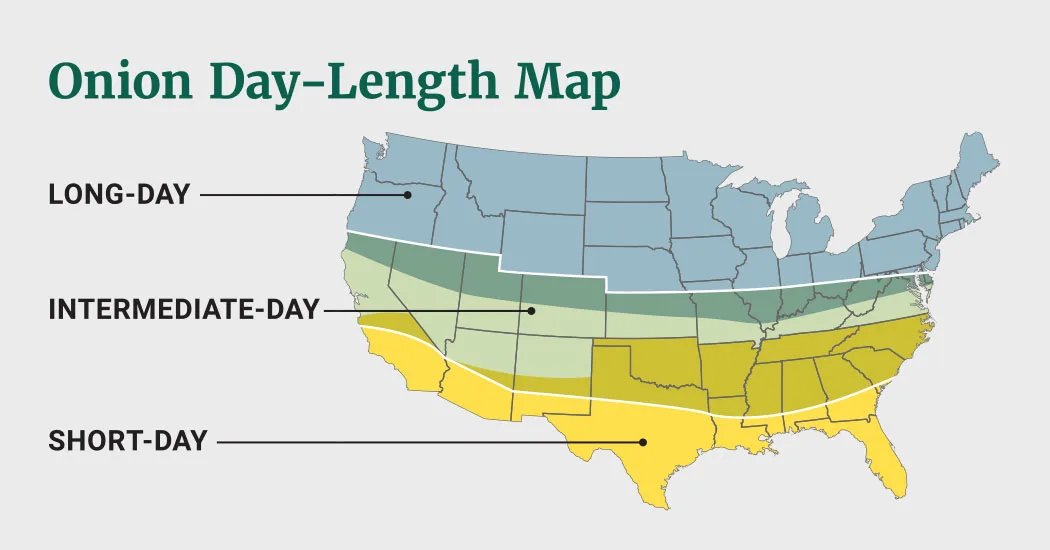
Image source: Web (Bing) / johnnyseeds.com (Web image (fair-use with source credit))
This is where most gardeners get stuck. Let's make it simple.
Short-day onions need 10 to 12 hours of daylight to start bulbing. They work best south of the 36th parallel roughly from San Francisco to Raleigh. If you live in the Deep South, Gulf states, or California's Central Valley, short-day varieties are your best bet.
They mature in spring before summer heat sets in.
Long-day onions need 14 to 16 hours of daylight. They are the right choice north of the 36th parallel. That covers most of the Midwest, Northeast, Pacific Northwest, and all of Canada.
Long-day onions grow through the long summer days of northern latitudes and mature in late summer.
Intermediate-day onions fall in the middle. They start bulbing at 12 to 14 hours of daylight. These are the safest pick if you live in a transition zone like Virginia, Tennessee, or northern California.
They also work well for gardeners who are unsure of their exact day-length zone.
Here is the rule of thumb. If you live in a state with hot summers that start before June, choose short-day. If your summers stay mild through July and August with long evening light, choose long-day.
If you are right in the middle of the country, go intermediate.
A quick way to check. Look up your city's average day length on the summer solstice, June 21. If it is under 14 hours, you are a short-day zone.
If it is over 15 hours, you are a long-day zone. The rest is intermediate.
Step-by-Step Planting Workflow for Your Chosen Onion Type
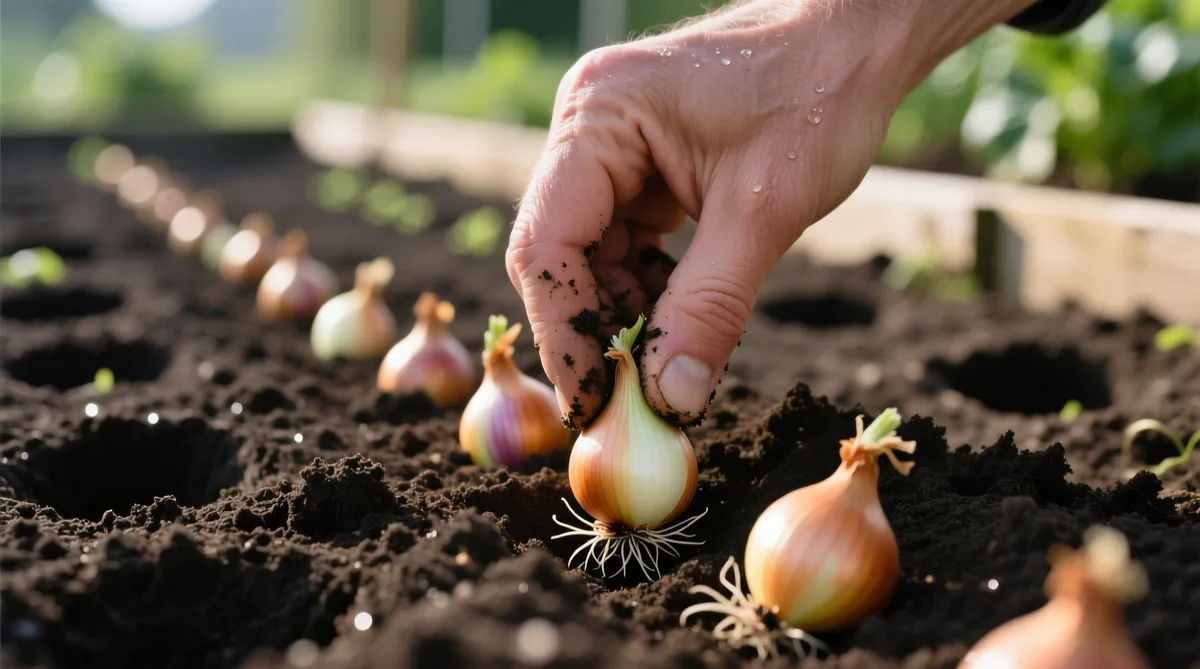
Image source: Web (Bing) / spice.alibaba.com (Web image (fair-use with source credit))
Once you have the right starter and the right day-length variety, the actual planting is straightforward. Here is the process that gives consistent results.
Prepare the soil. Onions need loose, well-drained soil with a pH between 6.0 and 7.0. Work in 2 inches of compost a week before planting. Do not add fresh manure or high-nitrogen fertilizer at planting time.
That causes soft growth and disease issues.
Plant at the right depth. For sets, press them into the soil so the tip is just at or slightly below the surface. The neck should be barely visible. Planting too deep causes small bulbs.
For seeds, plant 1/4 inch deep. For transplants, set them at the same depth they were growing in the pot.
Space correctly. Crowded onions stay small. Space sets and transplants 4 to 6 inches apart in rows 12 to 18 inches apart. For seeds, sow thinly and thin to the same spacing once seedlings are 3 inches tall.
Water consistently. Onions are shallow-rooted. They need about 1 inch of water per week from planting until the tops start falling over. Inconsistent watering leads to split bulbs and bitter flavor.
A soaker hose works better than overhead sprinklers.
Fertilize at the right time. Apply a balanced fertilizer like 10-10-10 at planting. Side dress with a nitrogen source once the plants are about 6 inches tall. Stop all fertilizing once the bulbs start swelling.
Too much late-season nitrogen reduces storage life and makes bulbs soft.
Stop watering at the right moment. When about half the tops have flopped over naturally, stop watering. This signals the plant to stop growing and start curing. Wait about two weeks after that before harvesting.
Common Onion Growing Mistakes (And How to Avoid Them)
Even experienced gardeners hit these snags. Here are the most frequent ones and how to sidestep them.
Planting the wrong day-length variety. We covered this earlier. It is the number one cause of small or nonexistent bulbs. Check your latitude before you buy.
Overcrowding. People want to maximize space and plant sets close together. The result is a row of onion bulbs the size of walnuts. Each plant needs room to expand.
Follow the 4 to 6 inch spacing rule.
Inconsistent watering. Onions are picky. Let them dry out too much and growth stalls. Flood them and bulbs rot.
The key is steady moisture. If you cannot water weekly, skip onions or use a drip irrigation timer.
Harvesting too early or too late. Harvest when 50 to 75 percent of the tops have fallen over naturally. Pulling too early gives you undersized bulbs that do not store well. Waiting too long risks rot or splitting.
Skipping the curing step. Freshly harvested onions are full of moisture. Pack them into storage immediately and they rot within weeks. Cure them in a warm, dry, ventilated spot for two to three weeks.
Trim the roots and cut the tops back to 1 inch before storing.
Storing in the fridge. Refrigerators are too humid for cured onions. The moisture softens them and encourages mold. Store in a cool, dark, dry place around 32 to 40 degrees Fahrenheit.
A basement or garage shelf works well.
FAQs About Growing Onions
Can I grow onions from store-bought onions?
Not reliably. Grocery store onions are often treated with sprout inhibitors. Even if they sprout, they may carry disease that contaminates your soil.
Use seed, sets, or transplants from a reputable supplier instead.
Why are my onions flowering instead of bulbing?
That is bolting. It happens when young plants get exposed to cold temperatures followed by warm weather. The plant thinks its life cycle is ending and rushes to flower.
Plant at the correct time for your zone and protect seedlings from hard frosts.
How do I know when they are ready to harvest?
Watch the tops. When 50 to 75 percent of the leaves have fallen over naturally and started to brown, the bulbs have stopped growing. Stop watering, wait two weeks, then pull them.
Do not bend the tops yourself. Let them fall on their own.
Can I grow onions in a container on my balcony?
Yes, if the container is at least 10 inches deep and has drainage holes. Use loose potting mix, not garden soil. Space bulbs 4 inches apart.
Water consistently. Container onions need more frequent feeding because nutrients wash out faster.
What do I do with tiny onions at harvest?
Use them as scallions fresh in salads or stir-fries. Or cure them as "pearl onions" for pickling. They will not grow larger in storage.
If you want bigger bulbs next time, increase spacing and check your day-length match.
The Final Decision Guide: Which Onion Is Right for You?
Here is a quick reference table based on your situation.
| Your Situation | Best Starter | Best Day-Length Type |
|---|---|---|
| Beginner, wants easy first harvest | Sets | Match to your latitude |
| Wants specific heirloom varieties | Seeds | Match to your latitude |
| Short growing season (northern climate) | Sets or transplants | Long-day |
| Hot, mild-winter climate (southern U.S.) | Transplants or sets | Short-day |
| Unsure of your zone | Transplants | Intermediate-day |
| Limited space, container growing | Sets | Short-day or intermediate |
| Maximizing storage onions | Seeds | Long-day (northern) or short-day (southern) |
If you remember only one thing from this guide, make it this. Match your onion variety to your day-length zone. Everything else is secondary.
Plant the wrong type and no amount of watering, fertilizing, or coddling will fix it.
Checking Your Hardiness Zone: A Quick Note
Your USDA hardiness zone tells you your average winter low temperature. That helps with perennial plants and fruit trees. It does not tell you your day-length zone for onions.
For onion success, you need your latitude or your summer solstice day length. The USDA Plant Hardiness Zone Map is a good starting point for general climate data. But pair it with your local extension office.
Search for your county name plus "extension office" to find free, region-specific planting calendars.
Your extension service has already done the work. They know which onion varieties perform best in your area. Use them.