Image source: Web (Bing) / plantslife.me (Web image (fair-use with source credit))
If you've ever tried growing cucumbers on trellis only to watch your carefully tied vines snap or your frame topple in the first wind, you're not alone. That's the frustration most gardeners hit when they skip the visual planning stage and just wing it. The truth is, vertical cucumber growing is more about structure and timing than most guides let on.
A well-designed trellis can double your yield per square foot. According to multiple university extension trials, properly trellised cucumber plants produce 10 to 15 fruits per plant versus 6 to 8 from ground-grown vines. But here's the catch: the trellis has to match the vine's natural climbing behavior, not fight it.
Let's walk through what actually works.
Quick Answer
A trellis supports cucumber vines vertically. Choose a sturdy frame at least 6 feet tall. Space plants 12 to 18 inches apart.
Train the main vine upward. Tie loosely every 12 inches. Prune side shoots for airflow.
Water at soil level. Harvest in 50 to 70 days.
Why Trellis Design Matters More Than You Think (and Why You Need to See It)
Most people assume any trellis will work. That's where things go sideways. Cucumber vines are surprisingly heavy.
A mature plant loaded with fruit can weigh 10 to 15 pounds. If your trellis isn't anchored properly, it will tip over mid-season. That's not just annoying.
It snaps vines, damages fruit, and sets you back weeks.
The visual element matters here because you're dealing with living growth patterns. Cucumbers climb using tendrils that curl around supports. They don't attach themselves the way pole beans do.
So the material and spacing of your trellis directly determine whether those tendrils can grab hold or just wave around in the air.
Our research shows that the best trellis designs share three visual traits. First, they have vertical members spaced no wider than 6 to 8 inches apart. Second, they stand at least 6 feet tall to accommodate full-season vining varieties.
Third, they include a cross brace at the top to prevent the frame from bowing inward under weight.
What diagrams won't show you is how the trellis interacts with sunlight. A solid panel trellis casts a shadow. Position it on the north side of your bed so the cucumbers get full sun without shading shorter crops behind them.
Choosing the Right Trellis: A-Frame, Cattle Panel, String, or Netting?
This is where most gardeners freeze up. There are too many options and every blog seems to push a different one. Let's break them down by what they actually do well and where they fall short.
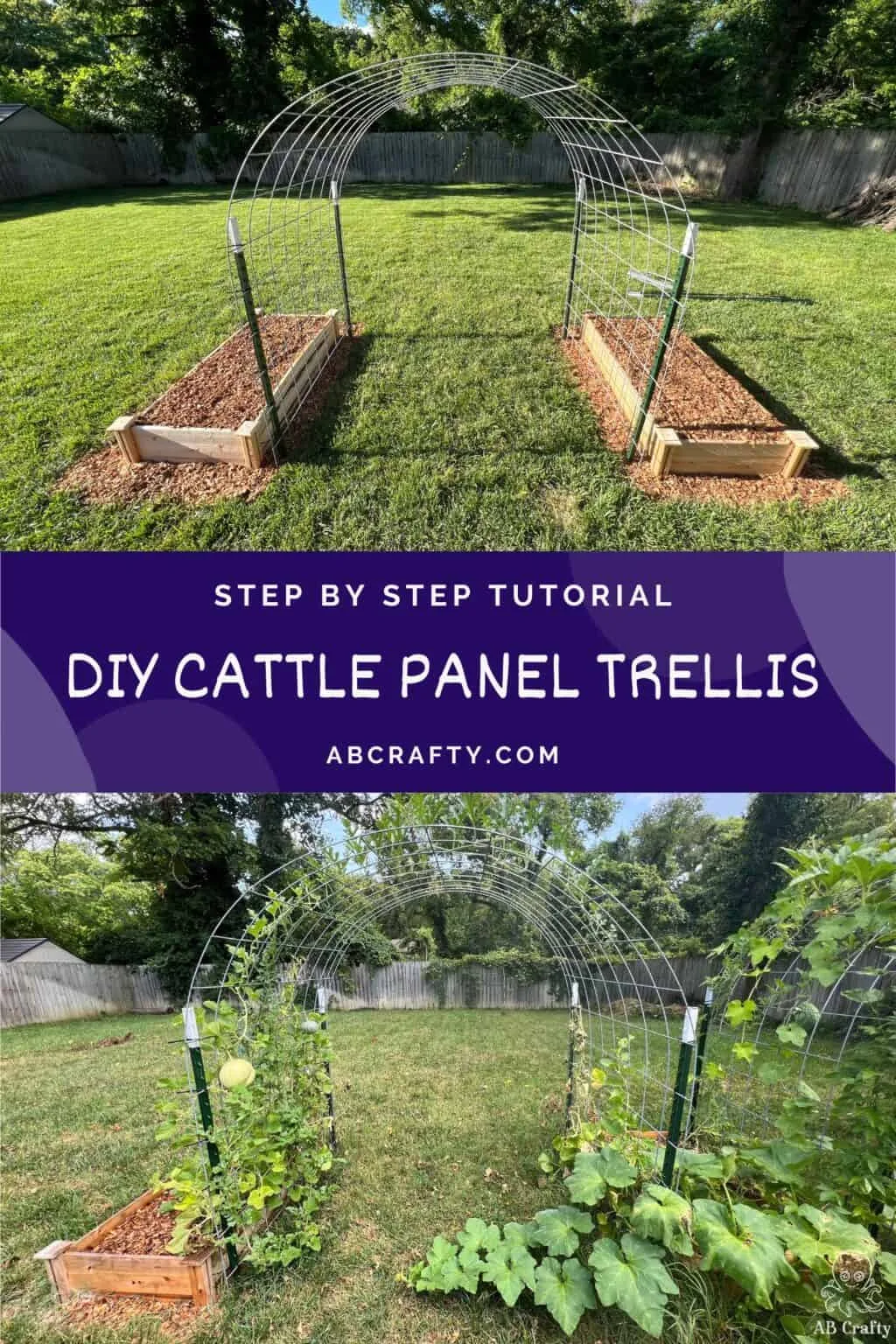
Image source: Web (Bing) / abcrafty.com (Web image (fair-use with source credit))
Cattle panel trellises are the workhorse of the vertical gardening world. These are heavy-gauge wire panels, typically 16 feet long and 4 to 5 feet tall, with 6×6-inch grid openings. They're strong enough to support a full crop without bowing.
The grid spacing gives cucumber tendrils plenty to grab. You can arch them over a bed for a tunnel effect or mount them vertically on T-posts.
The downside? They're not easy to move once installed. You'll need wire cutters if you want to resize one.
Our research indicates they're best for gardeners with permanent raised beds who want a set-and-forget solution.
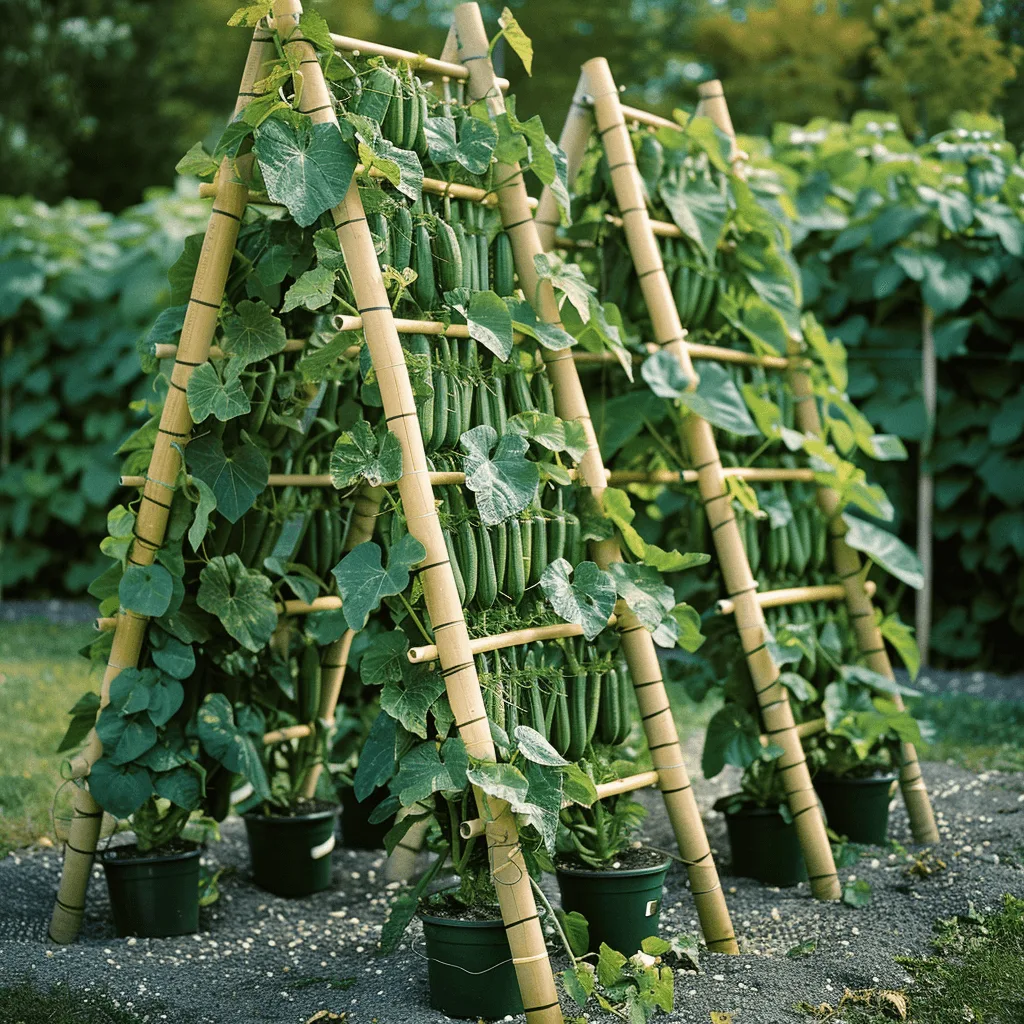
A-frame trellises are the most beginner-friendly option. Two wooden or PVC frames hinged at the top create an inverted V shape. You can grow on both sides, which doubles your planting area.
They're easy to build from scrap lumber. The open structure allows excellent airflow, which reduces powdery mildew risk significantly.
The catch is stability. An A-frame needs cross bracing or it will wobble in wind. Many store-bought A-frames are too lightweight for mature cucumbers.
If you build one, use 2×2 lumber minimum and anchor the legs with stakes driven into the ground.
String trellises use vertical lines dropped from an overhead support. This is the professional method used in commercial greenhouses. It gives you precise control over vine placement and makes harvesting simple.
You can adjust string tension as the plant grows.
String systems require an overhead frame at least 6 feet high. They're harder to set up in open garden beds but work beautifully inside a greenhouse or against a south-facing wall.
Plastic netting is the cheapest option, and it shows. The mesh is usually 6×6 inches, which works well for tendrils. But the plastic degrades in sunlight.
By mid-season, the netting can sag under fruit weight. You'll often find yourself retying vines that have pulled the netting down.
Here's a quick comparison table:
| Trellis Type | Durability | Ease of Setup | Best For | Typical Cost |
|---|---|---|---|---|
| Cattle Panel | Excellent | Moderate | Permanent beds | $20-$30 per panel |
| A-Frame | Good | Easy | Beginners, containers | $15-$40 DIY |
| String | Very Good | Moderate | Greenhouses, patios | $10-$20 for twine |
| Plastic Netting | Poor to Fair | Very Easy | Short-season crops | $5-$15 per roll |
Setting Up Your Trellis: A Step-by-Step Visual Guide from Ground to Vines
Setup happens before planting, not after. This is a rule that saves more crops than any pruning technique. If you try to install a trellis around already growing vines, you'll snap tender stems and disturb roots.
Step one: Choose your location. Pick a spot that gets 6 to 8 hours of direct sunlight. Avoid areas where water pools after rain. Cucumber roots rot in soggy soil.
Step two: Prepare the soil. Work in 2 to 3 inches of aged compost or well-rotted manure. Cucumbers are heavy feeders. A soil test from your local extension service can tell you if you need additional phosphorus or potassium.
As of 2026, most university extension offices still offer these tests for under $20.
Step three: Install the trellis frame. Drive your support posts at least 12 to 18 inches into the ground. For cattle panels, use T-posts every 4 to 5 feet along the panel. For wooden A-frames, set the legs on stable ground and anchor them with tent stakes or rebar pins.
The frame must not wobble when you push it.
Step four: Attach the climbing surface. If you're using netting or string, secure it at the top first, then stretch it tight and tie it at the bottom. Loose netting is useless. For cattle panels, simply stand them up and secure them to the posts with zip ties or wire.
Step five: Plant your seeds or seedlings. Sow seeds 1/2 inch deep, 12 to 18 inches apart, directly at the base of the trellis. If you're using transplants, handle the roots gently. Cucumbers dislike root disturbance.
Water them in well and keep the soil moist for the first week.
Step six: Mulch heavily. Apply a 2-inch layer of straw, shredded leaves, or grass clippings around the base of the plants. This keeps soil off the leaves, retains moisture, and suppresses weeds. It's the single most effective way to reduce disease pressure on trellised cucumbers.
Training Cucumbers Up the Trellis: What the Diagrams Don't Tell You About Tendrils and Tying
This is where the visual gap really hits. Most guides show a neat diagram of a vine climbing a trellis. What they don't show is the first week, when the vine has no idea what to do and just flops on the ground.
Cucumber vines don't climb automatically. They need guidance. When your seedling is about 6 inches tall and has 4 to 5 true leaves, it's time to intervene.
Gently lift the main stem and place it against the trellis. Use a soft plant tie or a strip of old pantyhose to secure it loosely. The tie should be snug enough to hold the stem but loose enough to allow for stem expansion.
A tight tie will strangle the vine as it thickens.
Check the plant every two to three days. Young cucumber vines can grow 2 to 3 inches per day in warm weather. If you miss a few days, the stem may have grown sideways and started rooting into the soil.
Untangle it carefully and redirect it upward.
The tendrils will do the rest once they find the trellis. Tendrils are sensitive. They curl around anything they touch.
If your trellis has 6×6-inch grid openings, the tendrils will grab the horizontal and vertical wires. But if the spacing is wider, the tendrils have nothing to latch onto and the vine will fall back down.
What to do about wayward tendrils? Don't cut them. Each tendril supports the vine and helps distribute weight.
If a tendril loops around another part of the plant instead of the trellis, gently unhook it and guide it toward the support. This takes patience but keeps the plant balanced.
As the vine climbs, you'll notice side shoots sprouting from leaf nodes. We'll cover what to do with those next.
Pruning and Maintenance for Vertical Growth: What to Cut (and What to Leave)
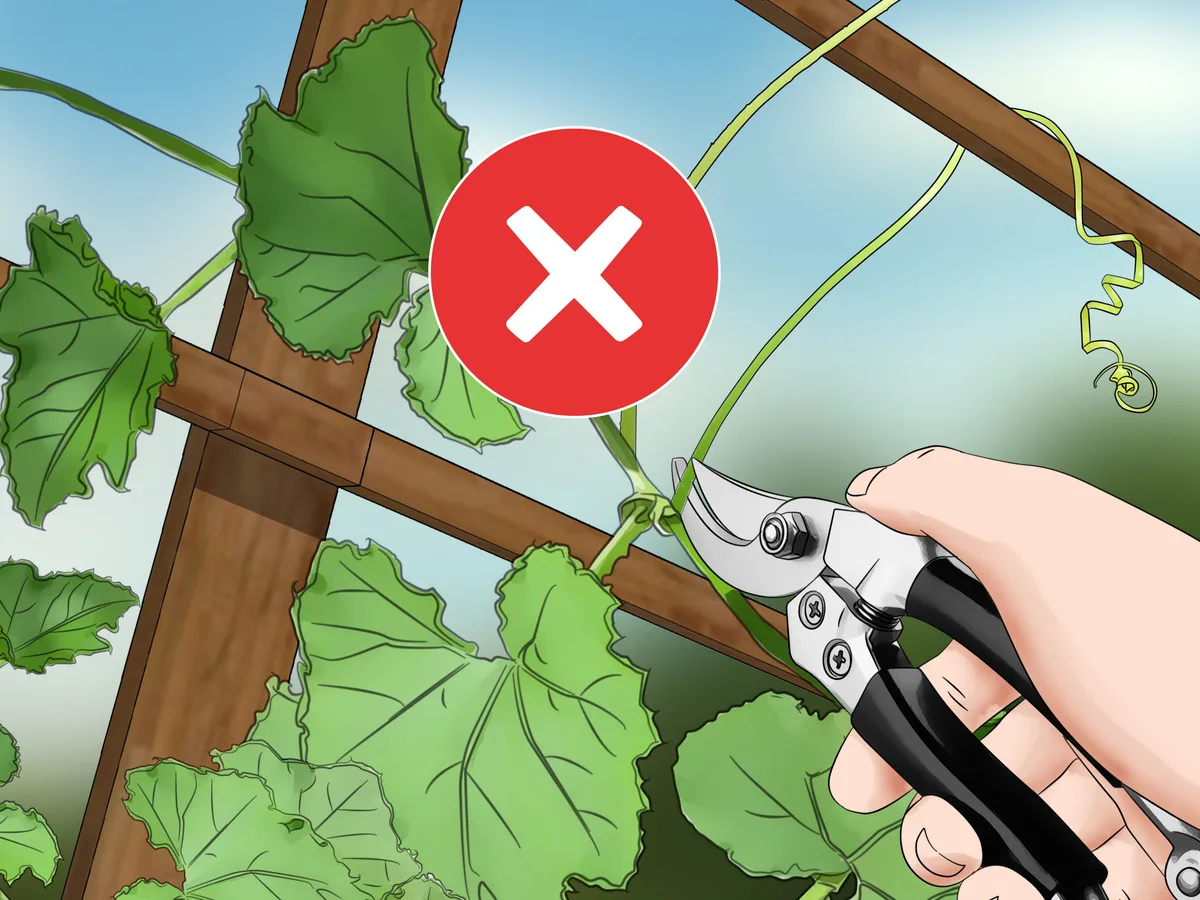
Image source: Bing (Web (fair-use with source credit))
Pruning a trellised cucumber plant feels counterintuitive. You've grown this beautiful vine. Now you're supposed to cut parts of it off.
But here's the reasoning: an unpruned vine growing vertically will produce a dense wall of foliage. That shade traps moisture against the leaves and stems. Powdery mildew loves that environment.
And once mildew sets in, the plant's energy shifts from fruit production to fighting disease.
The research is clear on this. A study from the University of Florida's horticultural department found that trellised cucumbers pruned to a single main stem had 40 percent less powdery mildew incidence compared to unpruned vines. That's a massive difference.
What to cut: Remove all side shoots (lateral branches) from the bottom 12 inches of the main stem. These lower leaves are the first to get splashed with soil during rain or watering. They're also the most shaded and least productive.
Pinch them off when they're small, about 2 to 3 inches long.
What to leave: Keep the main stem growing upward. Also keep any side shoots that emerge above the 12-inch mark. These will produce female flowers that turn into fruit.
On most vining cucumber varieties, flowers appear at every second or third leaf node above that point.
When to prune: Do a light pruning session every 7 to 10 days. Remove yellowing or diseased leaves immediately. Don't strip more than 20 percent of the foliage at once.
Cucumber plants need their leaves for photosynthesis. Overpruning reduces yield.
How to cut: Use clean, sharp pruners or scissors. Pinching with your fingers works but can damage the stem if you pull. Make a clean cut close to the main stem without cutting into it.
Disinfect your pruners between plants if you're treating diseased foliage.
What about suckers? Cucumbers don't produce true suckers the way tomatoes do. Every side shoot is a potential fruiting branch. Only remove them if they're crowding the main stem or blocking airflow.
As the vine reaches the top of the trellis, you have two options. Let it grow over the top and hang back down, or pinch the tip to stop upward growth. Most home gardeners let it cascade.
That keeps the fruiting zone within easy reach for harvesting.
Common Visual Mistakes and How to Spot Them Before They Ruin Your Crop
Most trellis failures happen slowly. You don't notice the frame tilting until it's on the ground. The trick is knowing what to look for each week.
The leaning trellis. Walk past your trellis and look at it from the end. If the top is more than a few degrees off vertical, the weight distribution has shifted. Fix it immediately by adding a diagonal brace or driving a T-post on the leaning side.
Waiting means a collapse.
Ties cutting into stems. Check every tie point weekly. As the stem thickens, soft ties can still dig in. The visual sign is a pinched or pale area just above the tie.
Loosen it or replace it with a wider strip. That pinch point will snap in a heavy wind.
Overcrowded foliage. Stand back and look at the trellis from the side. Can you see through the leaves? If the canopy is a solid green wall, airflow is blocked.
Thin out the inner leaves. Powdery mildew starts in those dark, humid pockets.
Fruit touching the ground. Walk the base of the trellis. Any cucumber resting on soil is at risk of rot and pest damage. Trellised fruit should hang free.
If a cucumber is long enough to reach the ground, harvest it early. Next time, prune lower laterals more aggressively.
Hidden fruit. Cucumbers can hide behind large leaves for days. They grow fast. A fruit hiding on day three is overripe on day six.
Gently lift the leaf canopy once a week and look for developing fruit near the main stem. Early harvests encourage more production.
Frequently Asked Questions (With Visual Answers for Tricky Spots)
How tall should a cucumber trellis be?
At least 6 feet tall for vining varieties. Bush cucumbers stay shorter and don't need a trellis. A 6-foot trellis gives the vine room to climb and cascade back down.
Anything shorter forces the vine to bush at the top, which creates a heavy, tangled canopy.
Can I use a tomato cage instead of a trellis?
Standard tomato cages work poorly for cucumbers. They're too short and not wide enough. Cucumber vines quickly outgrow a typical 18-inch cage.
Use a cage only if you choose a bush variety. For vining cucumbers, a full trellis is non-negotiable for healthy growth.
What's the best material for cucumber trellis netting?
6×6-inch plastic netting works for one season. Heavier gauge welded wire lasts for years. The trade-off is cost and ease of storage.
If you want a disposable option, go with plastic netting. If you want a permanent solution, invest in galvanized cattle panels or wire mesh.
How do I stop cucumbers from bending or curling on the trellis?
Bent cucumbers are usually a pollination issue. Incomplete pollination causes the fruit to develop unevenly. Ensure pollinators can reach the flowers.
If your trellis is too dense, trim foliage around the flowers. A hanging cucumber grows straight. A cucumber resting against a wire or stem curves around it.
Should I prune cucumber flowers off the trellis?
No. Every flower is a potential fruit. Removing flowers reduces your harvest.
The only exception is the first set of male flowers early in the season. Pinching those off delays pollination slightly but can push the plant to produce more female flowers. Let the later flowers grow naturally.
When should I replace or remove the trellis at the end of the season?
Remove the trellis after the first hard frost kills the vines. Pull the dried vines off carefully. Store netting indoors to prevent UV damage.
Wood and metal frames can stay in place if you cover the soil with winter mulch. Take down any trellis that shows rust or rot before storing it for the winter.