Growing chamomile is one of those garden projects that seems simple until you realize there are two completely different plants sold under the same name. Most beginners grab a packet, scatter the seeds, and end up confused when their "ground cover" shoots up two feet tall instead of staying low. The choice between German and Roman chamomile determines everything that follows: how you plant, where you plant, when you harvest, and how the plant behaves year after year.
Per USDA guidelines and manufacturer seed specs, German chamomile reaches 12, 24 inches tall and flowers in about 60 days from seed. Roman chamomile stays under 6 inches and spreads by runners. Getting this right first saves you months of frustration.
Let's walk through the decision tree so you can pick the right path from the start.
Which Chamomile Should You Grow? (German vs. Roman)
The single biggest decision when growing chamomile is choosing between the annual German type (Matricaria chamomilla) and the perennial Roman type (Chamaemelum nobile). They look similar at first glance but behave like completely different plants.
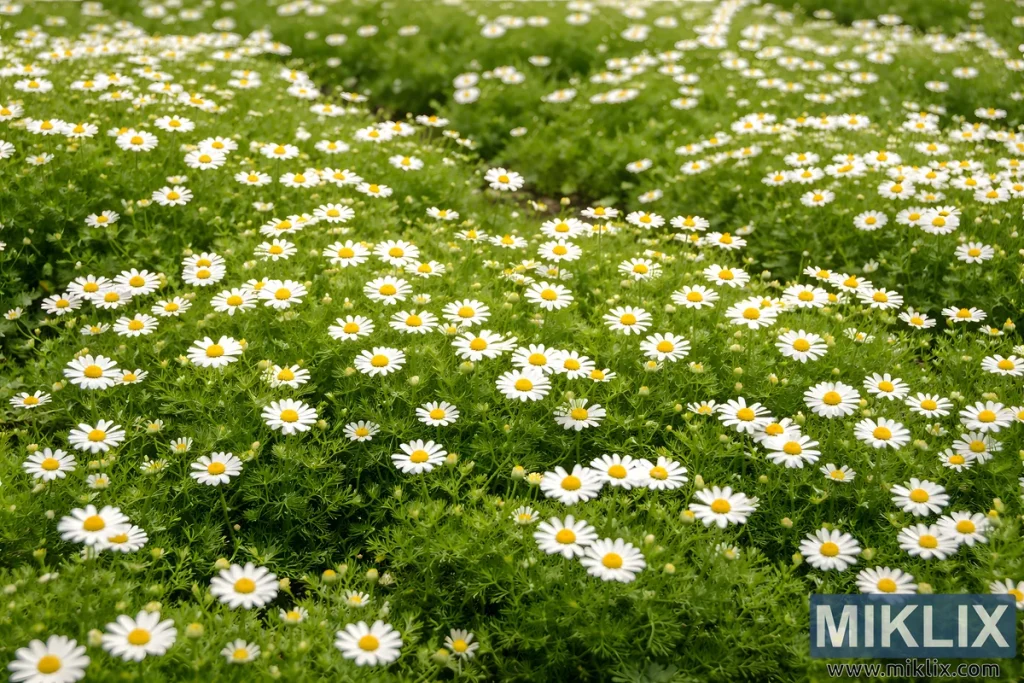
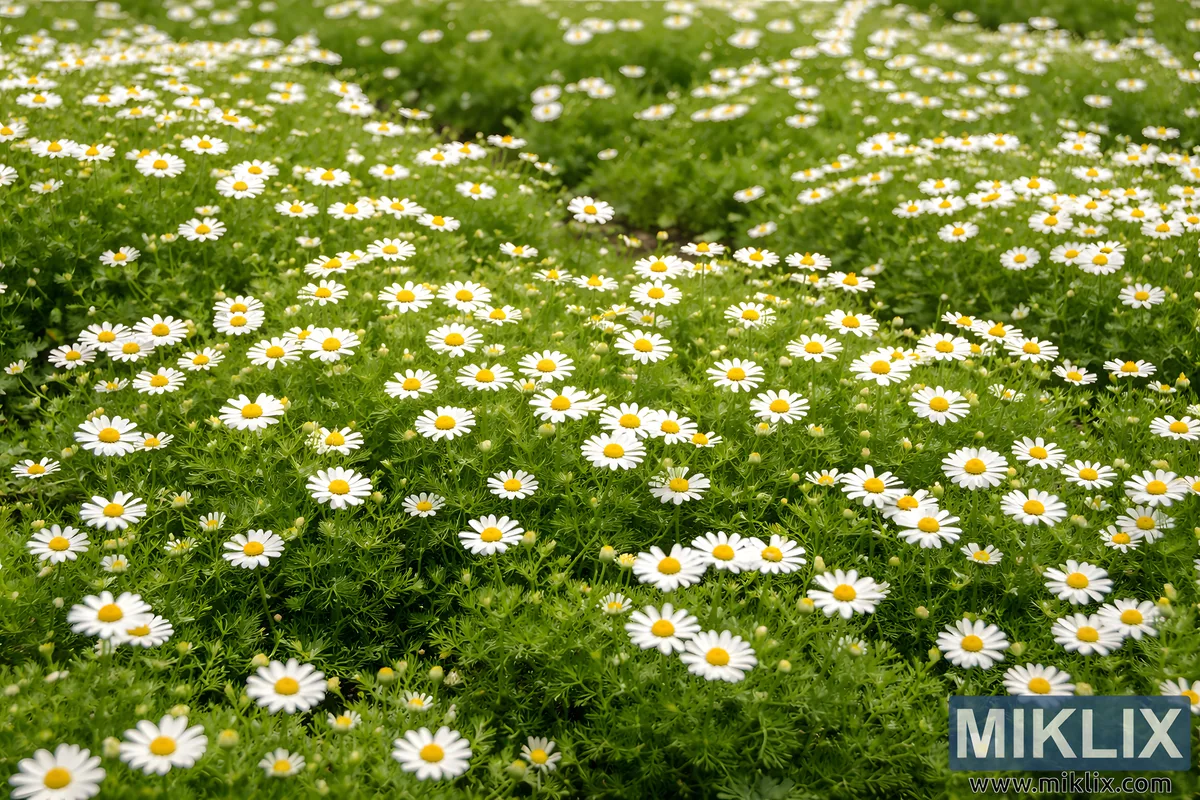
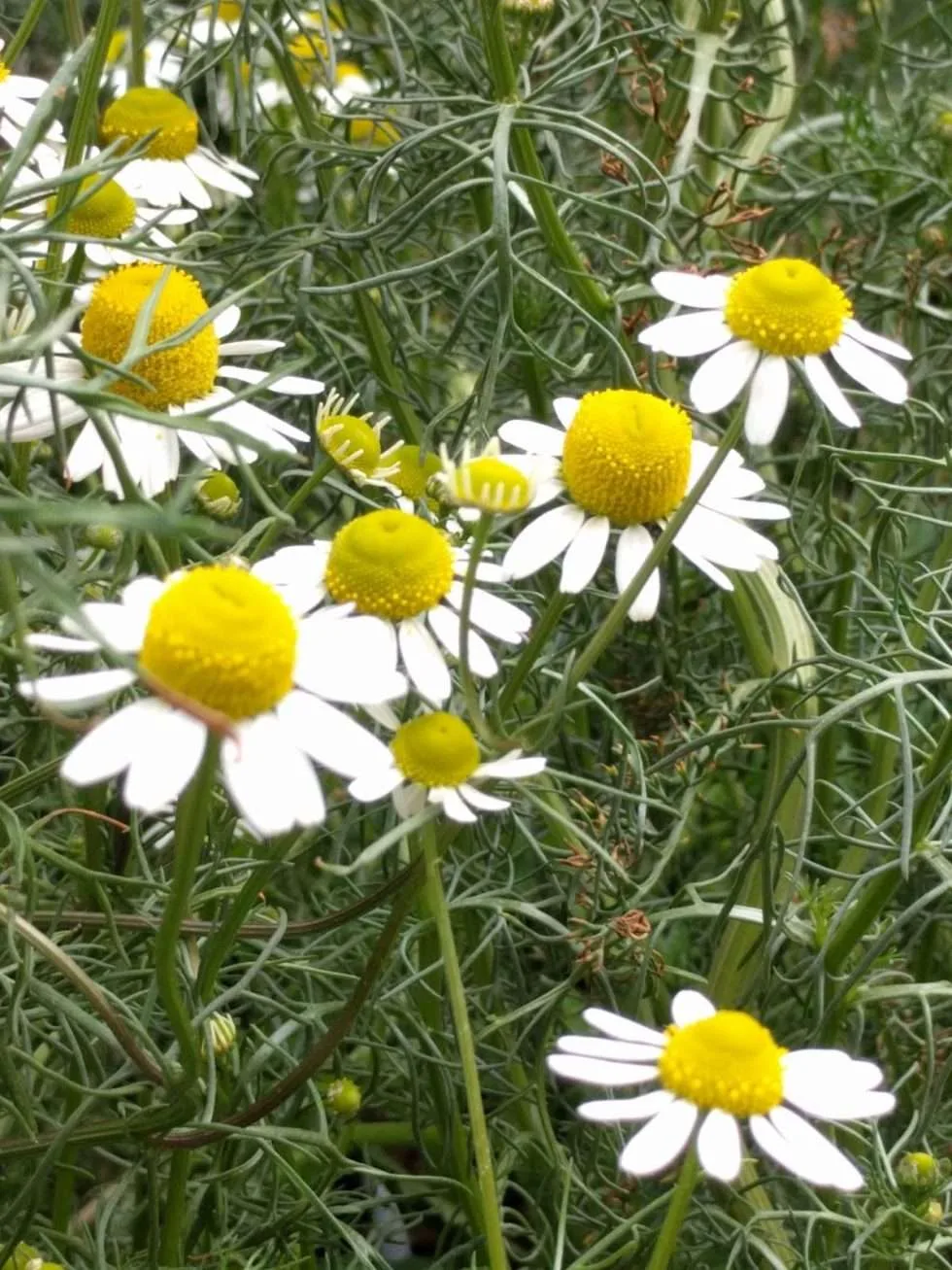
German chamomile grows upright and produces masses of small white daisy-like flowers with hollow conical centers. It blooms all summer, self-seeds readily, and dies with the first hard frost. You plant it once, but it volunteers for years if you let it drop seed.
Roman chamomile creeps along the ground, forming a dense mat of fine-textured leaves. It flowers in summer too, but the blooms are fewer and slightly larger. It stays and spreads, not from seed but from underground runners.
You can mow it or even walk on it.
The table below breaks down the key differences at a glance.
| Trait | German Chamomile | Roman Chamomile |
|---|---|---|
| Lifecycle | Annual (re-seeds) | Perennial (zones 4–9) |
| Height | 12–24 inches | 4–6 inches |
| Growth habit | Upright, bushy | Creeping, mat-forming |
| Flowers per season | Hundreds | Fewer, larger |
| Best use | Tea harvest | Ground cover / lawn |
| Seed propagation | Easy, direct sow | Slower, needs stratified seed |
If your goal is a steady supply of chamomile tea, go German. If you want a fragrant, low-maintenance lawn substitute or a living mulch between stepping stones, pick Roman.
Your Climate, Space, and Goal – How They Change the Game
Where you live and how much room you have will push you toward one type or the other.
German chamomile thrives in just about any temperate climate. It handles cool nights, moderate rain, and even light shade, though full sun gives the best flower yield. In hot southern regions (USDA zones 8 and up), plant it in early spring or fall to avoid summer heat that can cause it to bolt quickly.
In short-season northern areas, start seeds indoors four weeks before your last frost date. It adapts well to containers too, a single 12-inch pot can support a few plants and produce enough flowers for regular tea.
Roman chamomile needs slightly cooler summers and consistent moisture. It struggles in high heat and humidity. If your garden gets scorching afternoons, give it light afternoon shade.
It spreads slowly, so don't expect a full lawn in one season. For a chamomile lawn, you'll need 8 to 12 plants per square yard, spaced 6 inches apart, and it takes two seasons to fill in. Roman is less tolerant of drought; water regularly during dry spells.
Space matters in a different way. German chamomile self-seeds aggressively. If you let the flowers mature, you'll have hundreds of volunteers next spring.
That's great if you want a wild patch, but a headache in a tidy vegetable bed. Roman stays where you put it, spreading only as far as its runners reach.
The Two Big Growing Paths: Direct Sow vs. Indoor Start
Once you've chosen your type, the next fork in the road is whether to sow seeds directly in the garden or start them indoors.
Direct sowing works best for German chamomile. The seeds are tiny and need light to germinate, so you simply press them onto the soil surface without covering. Sprinkle them over a raked bed, water gently, and keep the soil moist for 7 to 14 days.
Thin seedlings to 6, 8 inches apart once they have two true leaves. Direct-sown plants develop deeper roots and handle transplant shock poorly anyway.
Starting indoors gives you a head start in cooler climates or when growing Roman chamomile from seed (though many gardeners buy Roman as transplants because seed germination can be slow and uneven). Sow in seed trays 4 weeks before the last frost. Use a fine seed-starting mix, scatter seeds on top, and mist.
Provide bright light and bottom heat at 60, 65°F. Transplant when seedlings have two sets of leaves and the weather is settled.

For Roman chamomile, many experienced gardeners skip seed and buy small plugs from nurseries. The cost is low, and you avoid the 2, 3 week germination wait with uneven results. Both paths work, just know your patience level.
Step-by-Step Workflow: From Seed to Harvest, Your Way
Here's a practical workflow that adapts to whichever decisions you've made. Use the path that fits your situation.
If you chose German chamomile, direct sow in spring:
- Rake the planting bed to a fine tilth. Remove large stones and clods.
- Scatter seeds on the surface. Do not cover. Space about 4 seeds per inch.
- Water with a fine mist. Keep soil damp but not soaking.
- Germination occurs in 7, 14 days. Thin to 6, 8 inches apart.
- Once plants reach 4 inches tall, water only when the top inch of soil feels dry.
- Start harvesting flowers when petals are fully open but still fresh. Pick in the morning after dew dries.
- Dry on screens in a warm, dark room for 5, 7 days.
If you start German indoors:
- Sow 4 weeks before last frost. Transplant after hardening off over 5 days.
- Space transplants 8 inches apart in the garden.
If you chose Roman chamomile for ground cover:
- Buy plugs or start seed indoors 6 weeks before last frost. Stratify seed in the fridge for 2 weeks first to improve germination.
- Transplant plugs 6 inches apart in spring after soil warms.
- Water regularly until runners start spreading. After establishment, water weekly in dry weather.
- Mow after flowering to keep the mat dense. Do not mow lower than 2 inches.
Harvesting both types:
Pick flowers at midday when they are fully open and dry. Use scissors or pinch the stem just below the flower head. Collect every 2, 3 days during peak bloom.
Fresh flowers yield about 10% of their weight dried, so 10 cups fresh becomes 1 cup dried. Store dried flowers in an airtight jar away from light.
Common Chamomile Mistakes (and How to Avoid Them)
Even experienced gardeners slip up on a few things. Here are the most frequent errors when growing chamomile, based on aggregate user feedback and extension service guidance.
Planting seeds too deep. Chamomile seeds need light to germinate. Covering them with even a thin layer of soil reduces germination drastically. Always press seeds onto the surface, never bury them.
Overwatering seedlings. Damping-off disease kills young chamomile seedlings fast. Keep soil moist but not wet, and ensure good air circulation. Use bottom watering or a mist bottle to avoid disturbing the seeds.
Choosing the wrong type for the space. Planting Roman chamomile in a small raised bed where you expect a tall tea crop leads to disappointment. Or planting German chamomile in a pathway where you wanted a ground cover creates a weedy mess. Check the table above before buying seed.
Harvesting too early or too late. Flowers picked before they fully open have less essential oil and weaker flavor. Flowers left too long begin dropping petals and can turn bitter. Harvest when the white petals are fully horizontal and the yellow center is slightly raised.
Ignoring self-seeding. German chamomile drops hundreds of seeds that overwinter and sprout like weeds the following spring. If you don't want volunteers in every corner, deadhead spent flowers before they set seed. Or let them go and transplant extras.
Planting in heavy clay. Chamomile hates wet feet. Clay soils that stay soggy after rain lead to root rot. Amend heavy soil with compost or grow chamomile in raised beds or containers.
Quick-Reference Decision Guide
Let's put all those choices into one clean table. Find your situation on the left, and your best path is on the right.
| If you want… | Go with… | Why |
|---|---|---|
| Loose tea for year-round drinking | German chamomile, direct sow | Highest flower yield, fast from seed |
| A walkable fragrant lawn | Roman chamomile plugs | Creeping habit tolerates light foot traffic |
| Low-maintenance ground cover | Roman chamomile | Spreads on its own, mow once after bloom |
| Flowers from a small balcony | German in a 12-inch pot | Compact, productive, self-contained |
| Plants in heavy clay soil | German in raised bed or container | Avoids root rot from poor drainage |
| Hot southern climate (zone 8+) | German, spring or fall planting | Avoids summer heat that shortens bloom |
| Partial shade only | German chamomile | Fewer flowers, but still productive |
| A one-time planting that returns | German, let it self-seed | Volunteers come back each spring |
Bookmark this table or snap a photo. It settles the German vs. Roman question in about 10 seconds.
If you're still unsure, start with German chamomile in a container. It's the cheapest, fastest, and most forgiving option. Once you see how it behaves, you'll know whether Roman is worth adding next season.
Frequently Asked Questions
Can chamomile survive winter?
German chamomile is an annual. It dies with the first hard frost. Roman chamomile is a perennial in USDA zones 4 through 9.
Mulch it with straw or leaves in cold climates to protect the crown.
How much sun does chamomile need?
Chamomile needs at least 6 hours of direct sunlight each day. It tolerates light shade but produces fewer flowers. In hot climates, afternoon shade helps the plant bloom longer into the season.
Can I grow chamomile indoors?
You can start seeds indoors, but chamomile grows best outdoors in full sun. Indoors, it tends to get leggy and produce sparse flowers. A south-facing windowsill is the best indoor option if you must.
How do I dry chamomile flowers?
Spread freshly picked flowers in a single layer on a screen or mesh tray. Keep them in a warm, dark, well-ventilated room for 5 to 7 days. Store dried flowers in an airtight glass jar away from light.
Why are my chamomile seedlings dying?
The most common cause is damping-off from overwatering. Let the soil surface dry between waterings. Provide air circulation with a small fan.
Thin crowded seedlings to prevent moisture buildup.
How often should I harvest chamomile?
Harvest every 2 to 3 days during peak bloom. Plants produce continuously through summer if you keep picking. Left unpicked, flowers fade quickly and the plant slows down flower production.