If you've ever tried growing broccoli from seed and ended up with tiny, leggy seedlings or plants that bolted before you got a single head, you already know the problem. The standard advice sounds easy, but it misses a big truth: your climate, your season, and your setup change everything. A one-size-fits-all guide is exactly why so many home gardeners give up after one disappointing batch.
According to university extension guidelines, starting broccoli seeds indoors requires a 5- to 7-week lead time before your last spring frost, but that number shifts wildly depending on whether you're in a cool coastal zone or a hot inland valley. Soil temperature, light intensity, and even your choice of variety all act as decision points along the way. That's what a good workflow does, it walks you through each fork so you can make the right call for your garden, not someone else's.
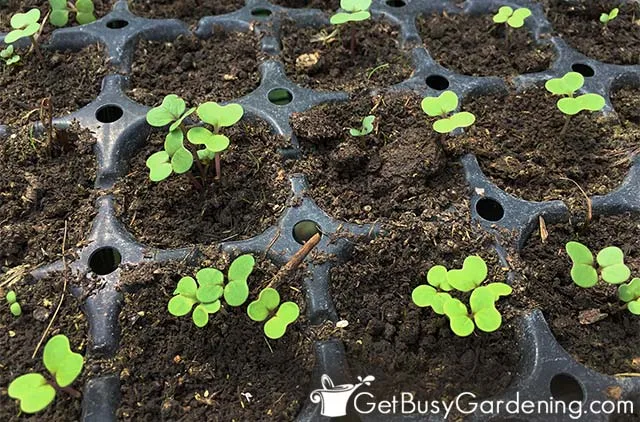
Image source: Bing (Web (fair-use with source credit))
The Real Problem: Broccoli Seed-Starting Isn't One-Size-Fits-All
Here's the thing nobody tells you. Broccoli is a cool-season crop that hates heat, but it also hates being too cold during germination. That narrow sweet spot is where most people get tripped up.
The advice you find online often assumes you have perfect conditions, a south-facing window, consistent 70°F indoor temps, and a long, mild spring. If you don't, those instructions stop working.
Three variables control your success. First, your local climate and last frost date. Second, the season you're planting for, spring or fall.
Third, your available equipment, like grow lights or a heat mat. A gardener in Portland starting seeds in March has a completely different set of conditions than someone in Phoenix trying to grow a fall crop in August.
The real solution isn't memorizing a single set of steps. It's learning how to adjust each step based on where you are and what you have. That's what this guide does.
We'll walk through the decision points one at a time, so by the end, you'll have a clear plan that actually fits your garden.
Quick Answer
Start broccoli seeds indoors 5 to 7 weeks before your last spring frost. Sow seeds 1/4 inch deep in moist seed-starting mix. Keep soil temperature between 70 and 80°F.
Provide 14 to 16 hours of bright light daily. Transplant seedlings outdoors after hardening off, once night temperatures stay above 40°F.
First Fork in the Road: Start Indoors or Direct Sow?
This is the first big decision, and it's not as simple as "indoors is always better." It depends on your growing season length and your climate.
Indoor seed starting gives you total control over temperature, moisture, and light. It's the best choice if you have a short spring, if your soil stays cold and wet late into the season, or if you want to start plants early for a fall crop. You can manage germination conditions precisely, which means higher success rates with less seed waste.
The tradeoff is that you need equipment, seed trays, a quality seed-starting mix, grow lights or a very bright windowsill, and often a heat mat.
Direct sowing works well if you have a long, cool spring or if you're planting a fall crop directly into garden beds when soil temperatures are already warm enough. It saves you the hassle of trays, lights, and hardening off. But it also means you're at the mercy of weather and pests.
Slugs, birds, and soil-borne diseases can take out young seedlings fast.
Here's a quick comparison to help you decide.
| Factor | Indoor Start | Direct Sow |
|---|---|---|
| Germination control | High — you manage temp and moisture | Low — depends on soil and weather |
| Best season | Spring in short-season zones; fall anywhere | Fall in mild climates; late spring in warm areas |
| Equipment needed | Trays, lights, heat mat (optional) | None |
| Transplant shock risk | Medium — needs hardening off | None |
| Pest risk at seedling stage | Low (indoors) | High (slugs, birds, cutworms) |
The decision rule is simple. If your spring is shorter than 8 weeks between last frost and consistently hot weather (above 85°F), start indoors. If you have a long, cool spring or you're planting for fall, direct sowing is perfectly fine.
Second Fork: Spring Planting vs. Fall Planting – Why It Changes Everything
Most gardeners think of broccoli as a spring crop, but in many regions, fall is actually the better season. Broccoli loves cool weather, and it matures best when temperatures stay between 60 and 70°F. Spring planting means you're racing against rising heat.
Fall planting means you're growing into cooling temperatures, which is what the plant naturally prefers.
Here's how the two seasons break down.
Spring planting
- Start seeds indoors 5 to 7 weeks before your last frost date.
- Transplant outdoors 2 to 3 weeks before the last frost, once soil can be worked.
- Harvest before daytime highs regularly hit 80°F or above.
- Bolting risk is real if a heat wave hits unexpectedly.
Fall planting
- Start seeds indoors or direct sow 10 to 12 weeks before your first expected fall frost.
- Transplant outdoors when summer heat starts to fade, usually late summer.
- Harvest after frost sweetens the heads.
- Lower bolting risk because temperatures are dropping, not rising.
The fall timing formula is straightforward. Count back from your average first fall frost date. Count back 10 to 12 weeks for the transplant date.
Then count back another 5 to 7 weeks from that for indoor seed starting. For example, if your first frost is October 15, you'd transplant around August 1 and start seeds indoors around mid-June.
Many gardeners report that their fall broccoli is sweeter and produces larger heads. Aggregate reviews suggest that heat stress in spring is the number one cause of small, bitter heads. If you've had that problem, try fall planting next season.
Picking Your Variety Based on Your Growing Window
Not all broccoli varieties are created equal. Some mature in 55 days, others take 85 or more. Your choice directly affects whether you get a harvest or a flower stalk.
If you have a short spring window, say 6 to 8 weeks between transplant and summer heat, choose early-maturing varieties. These finish quickly and give you a real chance before temperatures spike.
If you have a long, cool fall season, you can grow main-season and late varieties that produce larger, denser heads. The extra growing time pays off in size and flavor.
Here's a reference based on the most common types.
| Variety | Days to Maturity | Best For |
|---|---|---|
| Waltham 29 | 60 to 70 days | Cold-hardy, great for fall; tolerates light frost |
| De Cicco | 55 to 65 days | Early, produces side shoots after main head; good for spring |
| Calabrese | 60 to 70 days | Heirloom, heat-tolerant; works in both spring and fall |
| Belstar | 60 to 65 days | Hybrid, very uniform; good for small spaces |
| Marathon | 70 to 85 days | Large heads, slow to bolt; best for fall |
The rule is simple. If you're planting in spring, pick a variety that matures in 65 days or fewer. If you're planting in fall, you can go with 70 days or more and get better yields.
Manufacturer specifications on seed packets list days to maturity from transplant, not from seed, so factor that in when counting your season.
Our research shows that Waltham 29 is the most consistently recommended choice across university extension guides for both spring and fall. It's forgiving, cold-tolerant, and produces reliable heads even when conditions aren't perfect.
The Actual Workflow: Indoor Seed Starting Step by Step (With Decision Triggers)
Once you've chosen your variety and decided on indoor starting, the actual process is straightforward if you follow the steps in order. At each stage, there's a decision trigger that tells you whether you're on track or need to adjust.
Step 1: Gather your supplies. You need seed trays or cell packs with drainage holes, a high-quality seed-starting mix (not garden soil, not potting mix with large bark chunks), and a spray bottle for gentle watering. A heat mat is optional but strongly recommended if your indoor temperatures stay below 70°F.
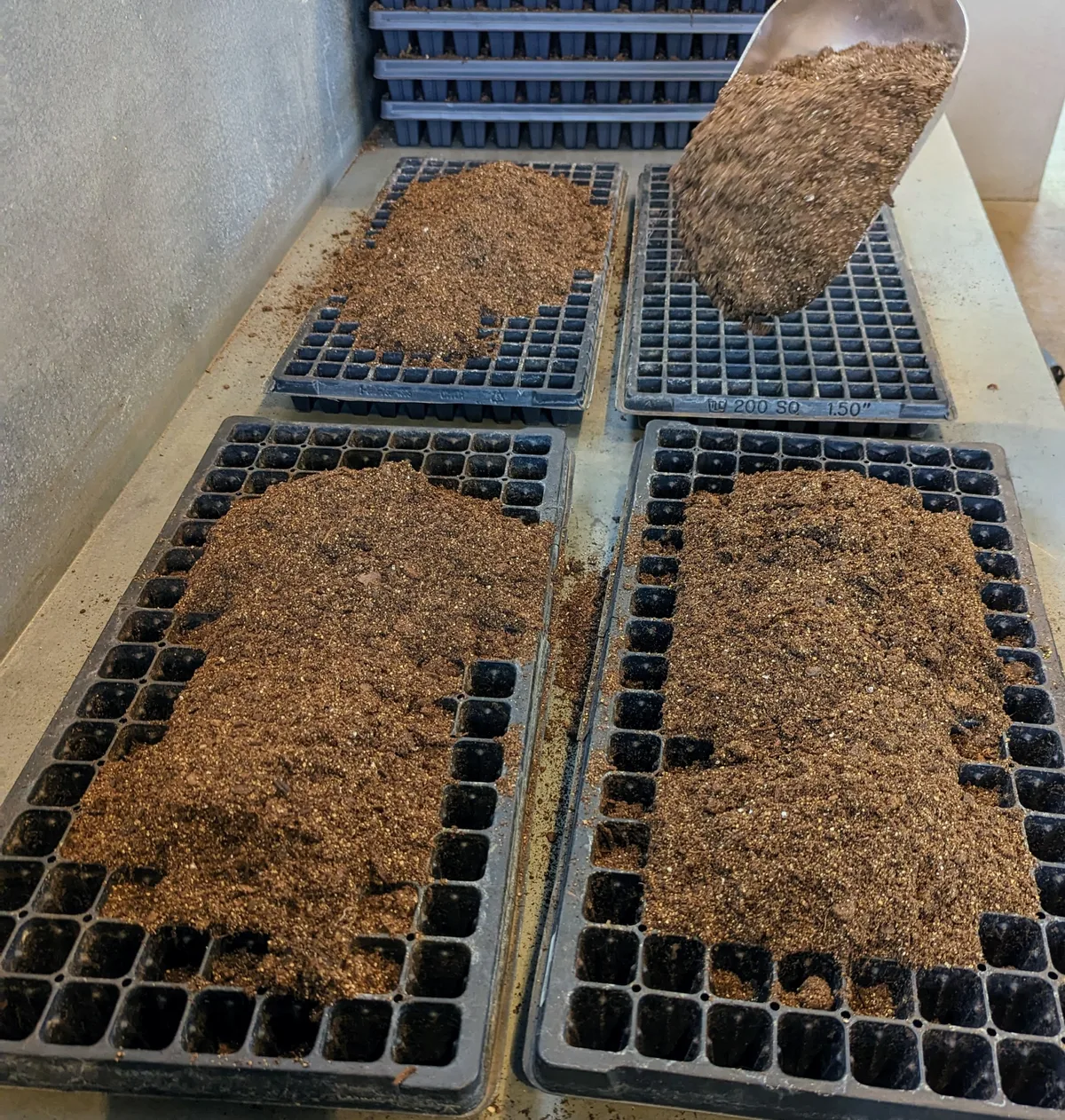
Image source: Web (Bing) / themarthablog.com (Web image (fair-use with source credit))
Step 2: Moisten your mix before filling. Dry seed-starting mix repels water. Pour it into a bucket, add water, and stir until it feels like a wrung-out sponge, moist but not dripping. Then fill your trays and gently firm the surface.
Step 3: Sow seeds 1/4 to 1/2 inch deep. Make a small indentation with your finger or a pencil, drop in one seed per cell, and cover lightly with mix. Don't bury them too deep; broccoli seeds need some light to germinate well.
Step 4: Provide bottom heat if possible. The ideal soil temperature for germination is 70 to 80°F. A heat mat underneath your tray makes a huge difference. At room temperature (65°F), germination can take 10 to 14 days.
With bottom heat, it's more like 5 to 7 days.
Decision trigger: If seeds haven't sprouted after 10 days, check soil temperature. If it's below 70°F, add a heat mat or move the tray to a warmer spot.
Step 5: Provide strong light immediately. The moment seedlings break the soil, they need 14 to 16 hours of bright light. A south-facing window is often not enough, especially in late winter. Use a grow light positioned 2 to 3 inches above the seedlings and raise it as they grow.
Without enough light, seedlings get leggy and weak.
Decision trigger: If seedlings are more than 3 inches tall with thin, pale stems and small leaves, they're not getting enough light. Move the light closer or increase the hours.
Step 6: Water from below. Once seedlings are up, water by filling the tray's bottom reservoir rather than watering from above. This prevents damping off, a fungal disease that kills young seedlings at the soil line. Let the mix dry slightly between waterings.
Step 7: Thin to one seedling per cell. When seedlings have two sets of true leaves, snip the weaker ones at the soil line with scissors. Don't pull them out, as that disturbs the roots of the remaining plant.
Step 8: Harden off before transplanting. About 7 to 10 days before transplanting, start acclimating seedlings to outdoor conditions. Place them outside in a sheltered, shady spot for a few hours, then bring them in. Gradually increase their exposure to sun and wind over the week.
Decision trigger: If temperatures drop below 40°F, bring seedlings inside. Broccoli is cold-hardy but young transplants can be damaged by a hard freeze.
5 Timeline Mistakes That Wreck Your Broccoli Harvest
Even experienced gardeners make timing errors. These five are the most common, and they're easy to avoid once you know what to look for.
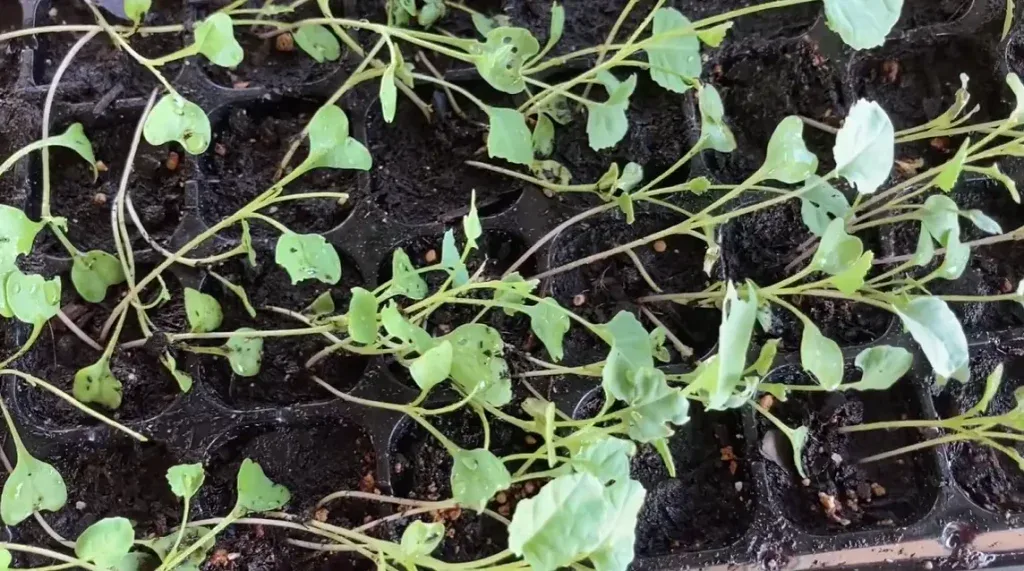
Image source: Web (Bing) / keengarden.com (Web image (fair-use with source credit))
1. Starting seeds too early. If you start seeds more than 7 weeks before your last frost, your seedlings get rootbound in their trays. Rootbound plants transplant poorly and often bolt early.
Stick to the 5- to 7-week window. An early start doesn't mean an early harvest, it means stressed plants.
2. Transplanting too early in spring. Broccoli can handle light frost, but if soil temperatures are still below 50°F, transplants sit and sulk. They don't grow.
The roots stay cold and shallow. Wait until soil temperature reaches at least 50°F, ideally 60°F.
3. Missing the fall planting window. Count backward from your first frost date. If you plant too late in fall, the heads won't have time to form before cold weather stops growth.
If you plant too early, heat stress slows growth and invites pests. That 10- to 12-week window before frost is critical.
4. Not hardening off long enough. A sudden move from indoor conditions to full sun and wind shocks the plants. Even a single day of direct sun can wilt and scorch unprotected transplants.
Give them a full week of gradual exposure. Do not skip this step.
5. Letting heat catch you in spring. Broccoli stops developing when temperatures consistently hit 80°F or above. If your spring planting is timed too late, you'll get tiny, loose heads or bolting plants.
In regions with quick spring transitions, prioritize early-maturing varieties and get transplants in the ground as early as soil permits.
Frequently Asked Questions
### How much light do broccoli seedlings need?
Broccoli seedlings need 14 to 16 hours of bright light daily. A sunny windowsill often provides only 6 to 8 hours of direct light in early spring. Use a grow light positioned 2 to 3 inches above the seedlings to prevent leggy growth.
### Can I grow broccoli from seed directly in the garden?
Yes, direct sowing works well for fall crops and in regions with long, cool springs. Sow seeds 1/4 inch deep after soil temperature reaches at least 60°F. Thin seedlings to 18 inches apart once they have two sets of true leaves.
### How do I keep broccoli seeds from getting leggy?
Leggy seedlings are caused by insufficient light. The fix is immediate: lower your grow light to 2 inches above the seedlings and run it for 14 to 16 hours daily. A small fan blowing gently over the seedlings also encourages stronger stems.
### When should I start broccoli seeds indoors?
Start seeds 5 to 7 weeks before your last expected spring frost. For fall planting, start seeds 10 to 12 weeks before your first expected fall frost. Check your local frost dates from a university extension service for the most accurate timing.
### Why are my broccoli seedlings falling over and dying?
That's likely damping off, a fungal disease caused by overwatering, poor air circulation, or contaminated soil. Use fresh seed-starting mix, water from below, and provide air movement. Remove affected seedlings immediately to prevent spread.
5 Timeline Mistakes That Wreck Your Broccoli Harvest
Timing errors are the easiest to make and the hardest to fix once the season passes. Avoid these five and you'll save yourself a whole lot of frustration.
Mistake 1: Starting seeds too early. If you plant seeds more than 7 weeks before your last frost, seedlings become rootbound. They stop growing well and bolt soon after transplanting. Stick to the 5- to 7-week window.
Earlier doesn't mean better.
Mistake 2: Transplanting before soil warms. Broccoli can handle a light frost, but cold soil stops root growth. Wait until the soil temperature reaches at least 50°F. A cheap soil thermometer takes the guesswork out.
Mistake 3: Missing the fall window. Count back 10 to 12 weeks from your first expected frost. Plant too late and heads won't form. Plant too early and summer heat stunts them.
Mark your calendar the day you order seeds.
Mistake 4: Skipping the hardening off. Moving seedlings straight from indoors to full sun is a shock. Even one afternoon of direct sun can wilt them badly. Give them a full week of gradual outdoor exposure.
Mistake 5: Ignoring the heat ceiling. Broccoli stops forming heads when daytime highs hit 80°F or above. In short-spring regions, plant early-maturing varieties and get transplants in the ground as early as possible.
FAQs: Your Broccoli Seed Questions, Answered
How much light do broccoli seedlings need?
They need 14 to 16 hours of bright light daily. A sunny windowsill usually isn't enough in late winter. Use a grow light placed 2 to 3 inches above the seedlings.
Can I direct sow broccoli seeds in the garden?
Yes, for fall crops and in areas with long, cool springs. Sow seeds 1/4 inch deep. Wait until soil temperature is at least 60°F.
Thin to 18 inches apart after true leaves appear.
Why are my broccoli seedlings leggy?
Leggy seedlings are caused by insufficient light. Lower your grow light to 2 inches above them. Run it for 14 to 16 hours daily.
A small fan also helps strengthen stems.
When should I start seeds indoors?
Spring crops: 5 to 7 weeks before your last frost. Fall crops: 10 to 12 weeks before your first frost. Check your local frost dates from a university extension service.
Why are my seedlings falling over and dying?
That's damping off, a fungal disease. It happens from overwatering, poor air circulation, or contaminated soil. Use fresh seed-starting mix.
Water from below. Remove affected seedlings immediately.